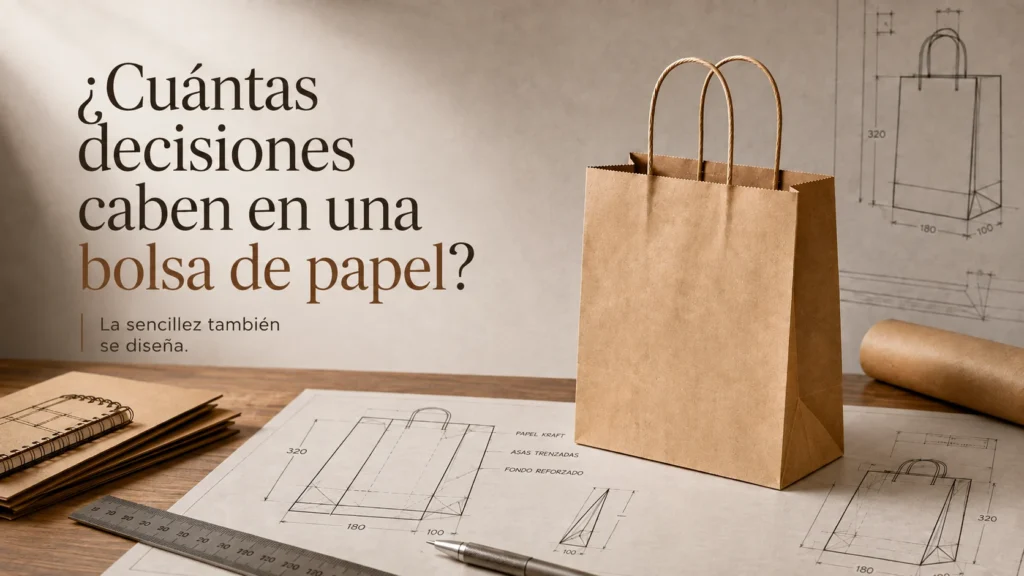
Far more than it may seem.
At first glance, a paper bag might appear to be a simple object: a set of dimensions, two handles, a bottom and a surface on which to print.
However, before a bag can be manufactured, many decisions have to be made. Some are visible. Others remain hidden in its folds, in the choice of paper, in the construction of the bottom or in the way the handles are integrated into the bag.
Every one of them affects its performance.
A paper bag must open easily, retain its shape, support the expected weight, protect the product, feel comfortable to carry and present the retailer’s image properly.
When everything works, it looks simple.
And that simplicity is precisely the result of making every decision well.
Dimensions change the bag
Width, height and gusset depth do more than determine how much a bag can hold.
They also affect its stability, the way products are placed inside, its behaviour during transport and the comfort of the person carrying it.
A bag that is too tall for a small product may be inconvenient. A base that is too narrow can make the contents difficult to arrange. A poorly proportioned format may affect both presentation and material efficiency.
Dimensions must therefore relate not only to the product, but also to the way the bag will be filled, stored and handed to the customer.
Just a few millimetres can change its performance more than we might imagine.
Choosing the right paper
Paper is not a single decision either.
Its composition, basis weight, strength, flexibility, appearance and printability must all be suited to the intended use of the bag.
Some applications require greater mechanical strength. Others need a surface capable of reproducing a brand image particularly well. Certain products may also require specific properties against grease, moisture or particular storage conditions.
The paper must work together with the design of the bag.
A higher-performance material cannot, on its own, compensate for a poorly planned format. In the same way, a good structure needs a paper capable of supporting it.
The right choice comes from finding the proper balance between material, construction and use.
Handles, bottom and folds
The least noticeable parts of a paper bag are often those that make it work.
The width and depth of the bottom determine its capacity to remain stable. Side folds allow the bag to open and create volume. The position of the handles affects weight distribution and carrying comfort.
Reinforcements, glued areas and the way each element is incorporated into the manufacturing process also matter.
These are decisions that the person receiving the bag will rarely notice, but they become immediately apparent when something does not work as it should.
A well-designed bag opens naturally, retains its shape and performs as intended.
Printing is also part of the design
Printing is not simply added at the end of the process.
The type of paper, the available surface, the folds, the position of the handles and the construction of the bag all influence the final graphic result.
An image may work perfectly on a flat artwork file and change once the bag takes shape. A line of text may sit too close to a fold. A colour may behave differently depending on the paper selected.
Graphic design and industrial design must therefore be understood as two parts of the same bag.
When they work together, the print becomes naturally integrated into the format and the brand identity accompanies the product consistently.
Simplicity is designed too
A good paper bag does not need to explain all the decisions behind it.
It simply works.
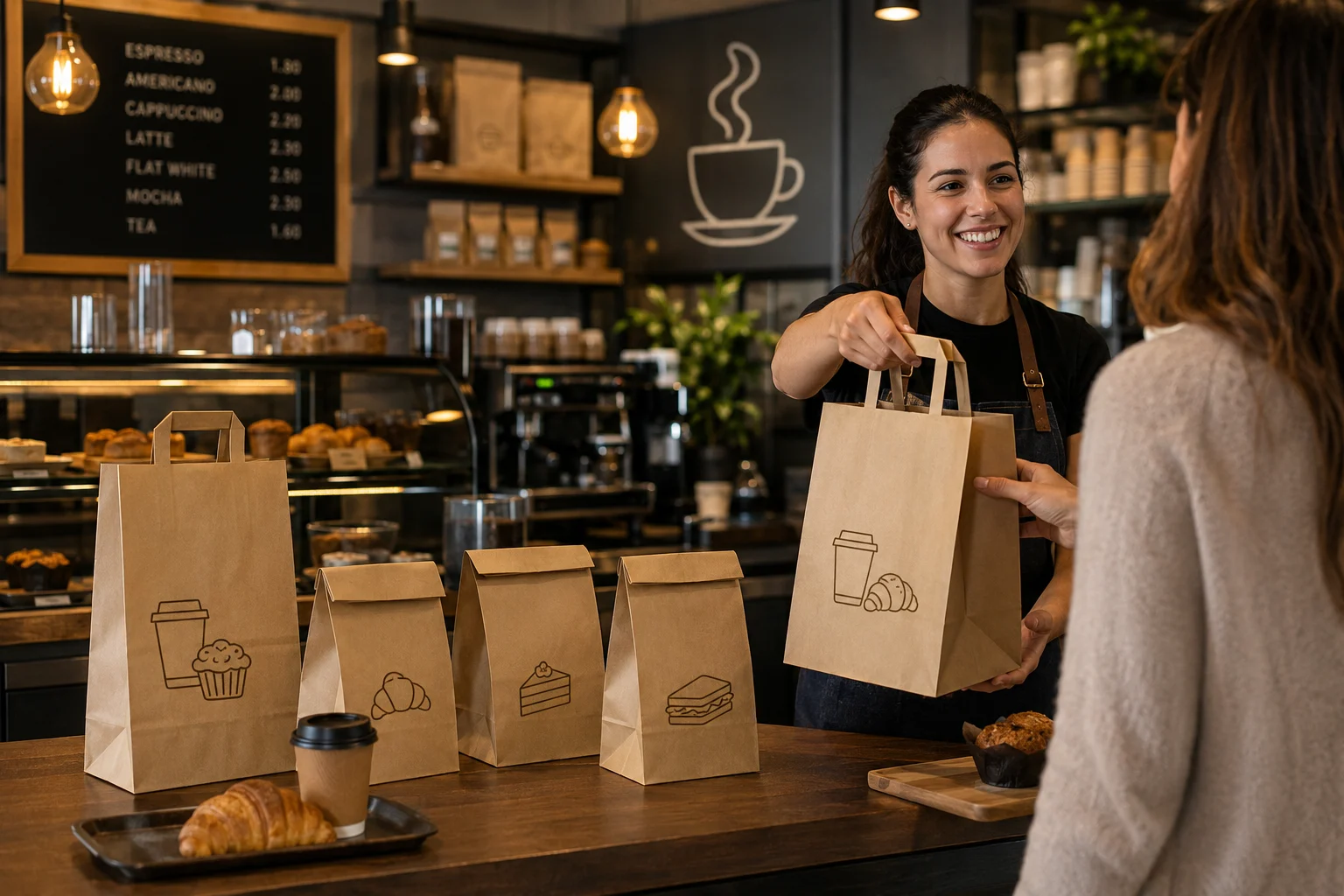
It opens properly. It is easy to fill. It keeps the product stable. It is comfortable to carry. It presents the purchase well and responds to the pace of the establishment.
Behind that apparent simplicity lies knowledge of materials, manufacturing, printing and performance in use.
At Innovaciones Subbética, we develop and manufacture paper bags by analysing each of these variables and seeking the right balance between functionality, strength, presentation and industrial efficiency.
Because a paper bag may look simple.
But it contains far more decisions than we can see.